CCWF hosts HOWL Immigration Empowerment Day
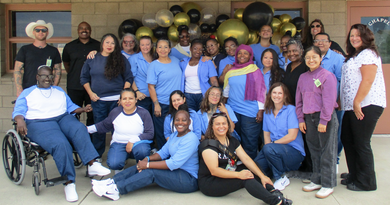
A small Central California Women’s Facility (CCWF) inmate leisure time activity group called Helping Others with Life Skills (HOWL) partnered with outside agencies to create a Day of Empowerment, held in the gym on May 2, 2026.
Personnel from Freedom for Immigrants, CALDEFENSE, California Coalition for Women Prisoners, Orange County Rapid Response Network, and Stanford Law School showed up to provide information to incarcerated individuals facing deportation.
Stephanie Love, HOWL’s sponsor since 2011, kicked off the event with introductions and gratitude to all in attendance.
“Today’s event is to help those impacted by the fear of deportation by providing them with information,” Love said. “Everyone selected for this event is here because they have an active Immigration and Custom Enforcement (ICE) hold.”
Residents Cynthia Dubose and Tien Mo, both HOWL members, moderated a Q&A with a panel of six from the Orange County Rapid Response Network, Stanford Law School, and Freedom for Immigrants.
The panel provided information vital to navigating the complexities inherent to the immigration and deportation process. Since nearly half of the participants were Spanish speaking, the entire Q&A was interpreted into Spanish by HOWL member Rosa Marin.
Longterm CCWF resident Rebeca Nivarez, mother of two and grandmother of three, expressed gratitude for the translation of the Q&A. She indicated that she would be walking out of the event with “many key pieces of information that [she] didn’t know, that were explained today.”
When asked about the biggest impact her ICE hold would have on her life, Nivarez said she imagines her grandchildren saying, “Don’t take away our grandma.” That brings her immeasurable sadness.
After the Q&A, Nora Igova and Mo, both members of HOWL as well as CCWF Paper Trail, shared their testimonies with the participants. Both women face deportation back to the countries of their birth, Bulgaria and China respectively. They shared similar stories about fear, feeling alienated, uncertainty and hopelessness. Their words resonated with participants.
Zewoinesh Badasso, another long term resident of CCWF, said “I feel them, because I too feel stressed and afraid about going back home.”
Andres Rodriguez from Freedom for Immigrants said it best: “It’s easier to fight for the rights of the free undocumented and much harder to fight for the rights of the felons who are also undocumented; and yet that is what we do.”
Next, it was time for the one-on-one consultations, held at tables arranged around the periphery of the gym.
This was the time for the participants to ask specific questions pertaining to their immigration case factors, gather relevant resource materials, and network with the outside agencies in attendance.
After the one-on-ones, both participants and outside personnel shared a lunch of pizza and soda. But even during lunch, the networking didn’t stop; all over the gym people were engaged in discussions about ICE detainers, legal permanent residency, and applying for asylum. There were expressions of gratitude all over the gym.
“I am grateful for all the information I received,” Yan Zhang, a Mandarin-speaking CCWF resident, said, “and I am especially grateful for all the support from both inside and outside people.”
Elodia Chamorro, CCWF long-termer, mother of six and grandmother of seven, said, “I wish ICE officials could see me; I have lived here all my life. I am an asset to my community, and even though I am undocumented, in my heart, I am as American as you.”
Traducida por Guadalupe Barragan
Un pequeño grupo de actividades recreativas para reclusas de Central California Women’s Facility (CCWF), llamado “Helping Others with Life Skills” (HOWL), colaboró con organizaciones externas para organizar un “Día de Empoderamiento,” celebrada en el gimnasio el 2 de mayo de 2026.
Representantes de Freedom for Immigrants, CALDEFENSE, California Coalition for Women Prisoners, Orange County Rapid Response Network, y Stanford Law School acudieron para brindar información a las reclusas que enfrentan una posible deportación.
Stephanie Love, coordinadora del grupo HOWL desde 2011, dio inicio al evento con una presentación y palabras de agradecimiento para todos los asistentes.
“El evento de hoy busca ayudar a quienes viven con el temor a la deportación, proporcionándoles información,” señaló Love. “Todas las personas seleccionadas para este evento están aquí porque tienen una orden de retención activa del Immigration and Custom Enforcement (ICE).”
Las reclusas Cynthia Dubose y Tien Mo, ambas integrantes de HOWL, moderaron una sesión de preguntas y respuestas con un panel compuesto por seis personas de la Orange County Rapid Response Network, Stanford Law School y Freedom for Immigrants.
El panel ofreció información vital para desenvolverse en las complejidades inherentes a los procesos de inmigración y deportación. Dado que casi la mitad de los participantes eran hablantes en epanoñol, toda la sesión de preguntas y respuestas fue interpretada al español por Rosa Marin, miembro de HOWL.
Rebeca Nivarez, residente de larga estancia en el CCWF, madre de dos hijos y abuela de tres nietos, expresó su agradecimiento por la traducción de la sesión. Comentó que se marchaba del evento con “mucha información clave que desconocía y que se explicó hoy.”
Al preguntársele cuál sería el mayor impacto de su retención por parte de ICE en su vida, Nivarez dijo imaginar a sus nietos diciendo: “No se lleven a nuestra abuela.” Esa idea le provoca una tristeza inmensa.
Tras la sesión de preguntas y respuestas, Nora Igova y Mo —ambas miembros de HOWL y de CCWF Paper Trail— compartieron sus testimonios con los participantes. Ambas mujeres se enfrentan a la deportación a sus países de origen: Bulgaria y China, respectivamente. Relataron historias similares marcadas por el miedo, la sensación de aislamiento, la incertidumbre y la desesperanza. Sus palabras calaron hondo entre los asistentes.
Zewoinesh Badasso, otra residente de larga estancia en el CCWF, comentó: “Las comprendo porque yo también siento estrés y miedo ante la idea de regresar a mi país.”
Andrés Rodríguez, de la organización Freedom for Immigrants, lo expresó de la mejor manera: “Es más fácil luchar por los derechos de los indocumentados que están en libertad y mucho más difícil luchar por los derechos de aquellos que, además de ser indocumentados, tienen antecedentes penales; y, sin embargo, eso es lo que hacemos.”
A continuación, llegó el turno de las consultas individuales, que se llevaron a cabo en mesas dispuestas alrededor del gimnasio. Fue el momento para que los participantes hicieran preguntas específicas sobre sus casos migratorios, recojieron materiales informativos y establecieran contactos con las organizaciones externas presentes.
Tras las consultas individuales, tanto los participantes como el personal externo compartieron un almuerzo de pizza y refrescos. Sin embargo, ni siquiera durante la comida cesó el intercambio de información; por todo el gimnasio, la gente conversaba sobre los detenidos por ICE, la residencia permanente legal y la solicitud de asilo. Se percibían muestras de gratitud en todo el gimnasio.
“Agradezco toda la información que he recibido,” declaró Yan Zhang, residente del CCWF y hablante de mandarín, “y estoy especialmente agradecida por todo el apoyo brindado tanto por las personas de dentro como por las de fuera.”
Elodia Chamorro, residente de larga estancia de CCWF, madre de seis hijos y abuela de siete nietos, dijo: “Ojalá los funcionarios de ICE pudieran verme; he vivido aquí toda mi vida. Soy un aporte para mi comunidad y, aunque no tengo documentos, en mi corazón soy tan estadounidense como ustedes.”