From chronos to committed
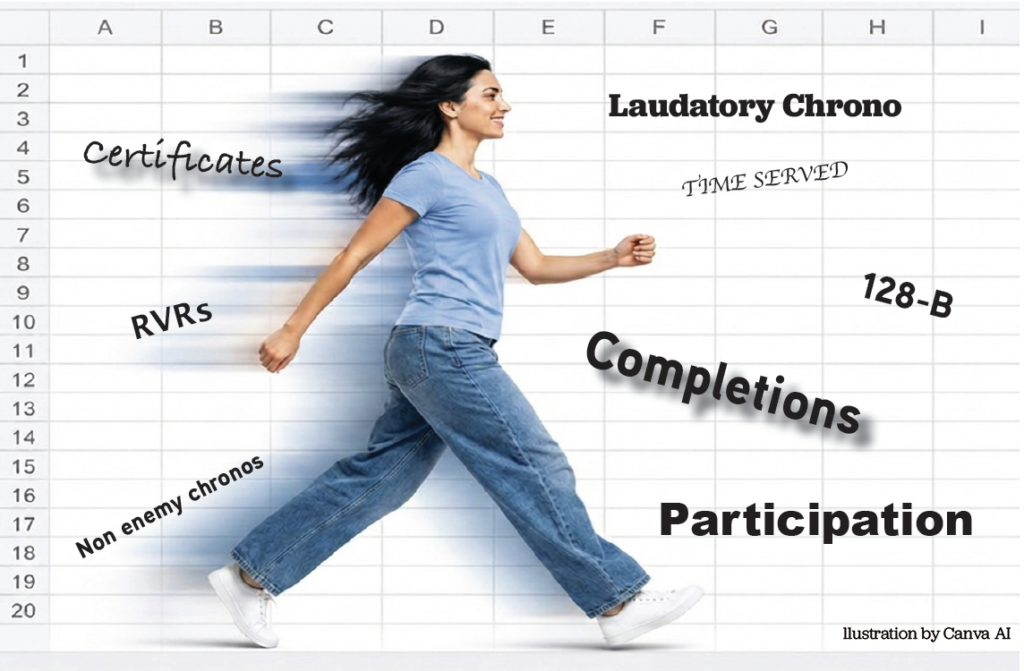
As incarcerated people, every aspect of our lives is documented in our Central File, also known as a “C-File.” This record holds our disciplinary infractions, educational transcripts, and everything in between. Our C-File is an official history of our time served, and adding to it with positive documentation can potentially help us gain freedom.
Pursuit of freedom is a common goal for those of us at Central California Women’s Facility (CCWF)—we chase it, sometimes in the form of chronos.
According to California Code of Regulations (CCR) Title 15, general chrono is defined as a California Department of Corrections and Rehabilitation (CDCR) form 128-B which is used to document information about incarcerated persons and their behaviors, and is stored in the C-File.
Some examples of 128-Bs involve disciplinary infractions, confidential details, enemy or non-enemy reports, and other damaging information. Therefore, often when a resident thinks about a 128-B chrono, it’s negative.
What CCR Title 15 does not go into detail about are the positive 128-B general chronos, which are documented as self-help and—more rare— laudatory.
Some 128-B general chronos are written to recognize residents for their dedication to completing self-help curriculum.
Laudatory 128-B chronos are a bit different. A resident does not obtain a laudatory chrono from taking a group. CCWF staff write laudatory 128-B general chronos to recognize outstanding behavior that they feel must be documented.
The term “chrono chaser” is one I learned after coming to CCWF. It tends to have a negative connotation. It means that residents are focused on going to groups for the self-help chrono, and not internalizing what is offered.
While at CCWF, I’ve learned the valuable practice of reflecting and being honest about where I’ve been. When I first got here, I didn’t take groups as seriously as I do now. But along the way I picked up little pieces of information that I apply today. Now, when I flip through my folder of certificates and chronos, I relish those pieces of paper and am grateful to the staff who recognized the effort. Those chronos are beneficial, especially laudatory.
“It is imperative to gain insight and apply the information [from groups],” long-term CCWF resident Lena Coleman said. “We spent all our lives chasing the wrong things so I don’t see anything wrong with chasing chronos.”
“In my opinion, so what! It’s better to chase a chrono than a bag of pruno [a toxic illegal prison crafted alcohol]. Attending any self-help or positive event will eventually be beneficial down the line.”
Long-term CCWF resident Latoya Jenkins also attests to the work it takes to earn a laudatory chrono.
“Once I got here I hit the ground running,” said Jenkins. “Chasing healing, volunteering, and constantly working around the institution.”
Exceptional conduct such as saving a life can earn a laudatory chrono too. For example, in 2018 a staff member was displaying signs of a stroke. In order to save her life, CCWF resident Valerie Nessler took the necessary steps to get her help and she survived.
“I didn’t even think twice about it,” Nessler said, “it is just something you do.”
Chasing chronos won’t free a person. The walls we’ve built within ourselves in order to survive keep us more confined than the brick and metal barriers surrounding the facilities in which we reside. It is the work behind the chronos that has the potential for us to really find freedom.