The cost of incarceration for loved ones

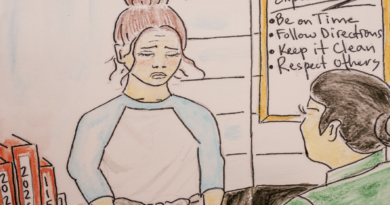
“Give her a chance to say goodbye to her family.” I will never forget those words from my judge in the courtroom at sentencing, nor the sadness, the harsh sound of wailing and tears streaking down my family’s faces. And all I could say was sorry.
When an incarcerated individual is sentenced, our families are sentenced as well. They endure and witness the loneliness, abandonment, shame, guilt, loss, discouragement, even death, and experience the financial hardship that comes along when supporting a loved one. This starts as soon as they hear the beginning of the automated phone system’s greeting, “You have a collect call from…”
The role of supporter to an incarcerated individual can become overwhelming. This includes enduring mental, emotional, and financial hardships. Formerly incarcerated peer Amy Preasmeyer said her mother told her, “It felt as if you died in those moments at trial and once you received your sentencing, it felt as if I was burying you.” That was their harsh reality, and a view of the emotional impact of having an incarcerated child.
Incarceration can be especially lonely for women and their families. According to the Prison Policy Initiative, incarcerated women are less likely to receive visits from family members as compared to men. Incarcerated women are often housed in prisons located far away from their families. Over 70% are incarcerated more than 100 miles from their homes.
Incarceration also negatively impacts physical health. Research from JAMA Network Open shows that partners of those inside experience depression, hypertension, and diabetes at higher rates, while their children are more likely to suffer from mental health issues and substance use, now and into the future.
JAMA also found that although there is limited research on intergenerational health impact related to incarceration, grandparents of incarcerated adult children also show greater signs of mental health concerns, especially if they are family caregivers.
During trial, most loved ones lose a sense of themselves due to the association of which side they are on. In those moments, no one is really looking at the mother, the grandmother, the child, or the sibling of those who committed the offense.
The main focus is the targeted victim. In various self-help groups, incarcerated persons learn whom they have impacted and how they have impacted them. This is known as, “the Ripple Effect,” yet this is not recognized during court proceedings, visitations, or through that shared sentence.
Growing up, I lost my father while he was incarcerated. He basically raised my brother and me through phone calls and letters. Without those two things we wouldn’t have had much. There is an eerie sadness, an unspoken vulnerability that emotionally challenges those who have an incarcerated loved one. This lack of communication, as Human Rights Magazine reports, “can contribute to a sense of abandonment, causing children to feel disconnected. This creates further isolation as communication and connection become prohibitively expensive.”
The financial hardship that many families face during a loved one’s incarceration also goes unacknowledged. Considering that incarcerated persons are not receiving a livable wage (from $.16 to $.74 per hour as reported in the Title 15 pay scale), families and loved ones are the means of paying off restitution, canteen purchases, and vendor packages as well as sales and amends expenses.
It is safe to say that loved ones provide for our basic necessities and financial obligations. This is done through dedication, love, and support. For them, giving up is not an option, but this does take a toll on them and their financial independence.
According to averages calculated by Mass Incarceration and the Family Tax, an incarcerated family member spends around $4,195 per year maintaining contact with loved ones.
There are some changes that could make a difference. Training staff members, bailiffs, and officers in compassion and communication could alleviate the uneasiness that families of the accused experience with visiting, court dates, etc.
Support groups could be established for victims and the families of the committed during the hearing process as well as post-hearing. This would positively impact the mental and emotional health of both sides.
Livable wages would help victims as well as the families of incarcerated individuals in making sure crime victims receive payment. Children of the incarcerated would benefit from receiving financial support for school and living costs.
In this harsh reality, people tend to believe the individuals that were harmed or lost their lives are the only ones who were affected by the crime that was committed. In reality, everyone involved is impacted by the process:
The judge taking a person away from their family, an EMT trying to save a life, the children pondering whether they’ll ever see their parent again, the mother and father impacted by shame. And the list goes on. This continues to be a harsh reality long after sentencing. Individuals are living and breathing, just waiting on their loved ones to make it home.
This is not to dim the light of our victims. This is to shine light on those who go unnoticed and unseen. To all the supportive family members and loved ones out there, thank you for staying strong and holding on. We see you.