The state of dental care in CDCR
Why we need policies to save our teeth
Author’s note: We decided to exclude the first names of some of the sources for medical privacy.
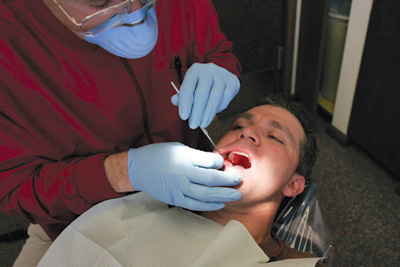
Within the California Department of Corrections and Rehabilitation (CDCR) and across the country, we lack access to proper dental care. In the free world, it usually comes down to a lack of insurance or good enough insurance.
But in Central California Women’s Facility (CCWF), and throughout CDCR, whether or not you can receive a dental procedure comes down to one question: Is your problem cosmetic or medically necessary?
The Health Care Department of Operations Manual section 3.3.2.9(a) Endodontics states that incarcerated individuals can only have certain dental work, like root canals, on the front six top or bottom teeth. All other teeth will be pulled.
In fact, most dental care the residents need to save their teeth from being pulled or to avoid dentures is considered cosmetic or medically unnecessary under the Health Care Department of Operations Manual section 3.3.5.14(c)(8)(b)(3), and 3.3.5.14(c)(8) (b)(4).
This is not to say the residents get bad or shoddy dental care, but that our institutional dentists have to work within these guidelines. So we need to take care of our teeth. Otherwise, we’ll lose them.
This policy has been in effect since April 2006 and hasn’t been revised for almost four years. It’s high time for a change.
One such resident, Cathy Sarinana, said she came to prison with all her teeth, and so far, she has had five pulled, not counting her wisdom teeth.
“I’m angry because if policy wasn’t so outdated, I would have all my teeth,” Sarinana said, adding that it has become difficult for her to chew certain foods.
Resident Williams, who asked to only use her last name due to the shame she feels, said she had all her teeth when she came to prison, but has since lost about half. She attributes this to the inability to have root canals done on her bicuspids and molars.
“When I got here, I had four crowns,” she said. “And when I started having issues with them, instead of repairing the crown, they pulled each tooth!”
Williams said she not only has difficulty chewing her food, but she also suffers from some depression over the situation.
Another resident, Carla Torres, said, “I’m terrified every time I have to go. I worry they’re going to want to pull one! The policy needs to include more; it’s very outdated.”
She added that she wished she could get all her teeth fixed and not just the front five or six.
Some residents would go as far as to pay for more extensive dental care.
Resident York, who also asked that her first name be withheld, said, “When it comes to my dental care, I would rather have to pay a copay for a root canal than have my tooth pulled!”
But others believe the state should take responsibility for dental care that reflects the care they would receive in the free world.
Resident Crochett, first name withheld, whose opinion resonates with the majority of the women I interviewed, said, “I’m a ward of the state, why should I have to pay anything? I take care of my teeth, so God forbid I have an issue that requires a root canal. As of now, I’d lose that tooth. The policy needs to be changed to include root canals of our back teeth.”
According to the American Association of Endodontists (AAE), “When possible, you should always consider treatments to save your teeth,” and that, often, pulling teeth will “negatively impact your quality of life.” The AAE also recommended, “when given a choice between tooth extraction and root canal treatment, always opt for root canal.”
As some residents have found to be true, the AAE says that “spaces left by extracted teeth can cause other teeth to shift, affecting your ability to properly chew and impacting your smile.”
It is clear that something needs to change. We would benefit from a policy change so that more is included in our dental care, and possibly also the return of a revised copay system.
The copay system was taken away a few years ago, likely because it was prohibitively expensive: a $5 flat rate for each medical and dental visit. Today, all care is free. But many people I spoke to would be willing to pay a small fee for enhanced care and a wider range of dental services.
However, not all residents would be able to afford a copay system based on the 8 to 48 cents we are paid per hour. It would take a hefty pay increase for all residents to have access. Indigent residents would need for all care to be provided free of charge.
Changing policy would be the best option at this time. CDCR and our policymakers need to make these necessary changes to improve our oral health and overall mental well-being.
Throughout the institution, I have found an overwhelming belief that policy is outdated and needs to be changed to include better dental care. So reach out to your local legislative leaders and call for necessary policy change. Policy change starts with all of us and not just with those in society.