Broken Hearts
In honor of American Heart Month, learn how to protect yourself from heart disease
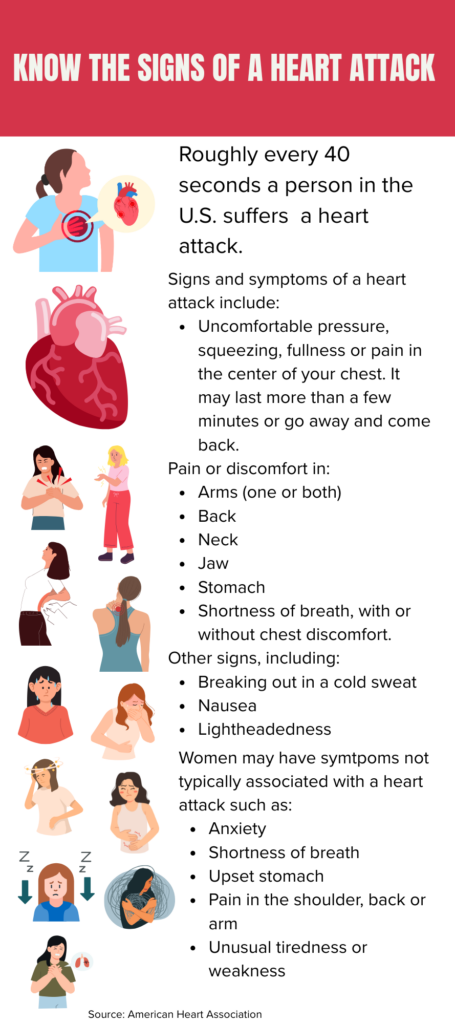
When you’re a young woman under 40, you believe that a heart attack isn’t possible. The idea of a heart attack is only for “old people.” According to the American Heart Association (AHA), “an American has a heart attack about every 40 seconds.” However, heart attacks do not discriminate, and women are more likely than men to die from one, according to the AHA.
In fact, heart disease is the leading cause of death for women in the United States and globally. And one of the reasons is that people do not recognize the symptoms of a heart attack.
A heart attack is an acute myocardial infarction caused by the sudden occurrence of coronary thrombosis (blood clots), which obstructs the blood supply to the heart and leads to necrosis (premature death) of heart muscle tissue, according to Wikipedia.
As a woman who has experienced a heart attack at 21, I understand the importance of being aware of the cues your body is trying to say to you. I, too, had the belief that my youth was a safeguard against a heart attack. But when I ended up in Pomona Valley Hospital emergency room, my age didn’t matter; a heart attack can happen to anyone.
Signs of a heart attack in young women get missed because of how common they seem. While the typical symptoms of a heart attack include chest pain, tightness, or discomfort, the AHA reports that women often experience atypical symptoms such as sharp or aching chest pain, shortness of breath, weakness, fatigue, and indigestion, to name a few. Most people would confuse these basic signs and symptoms with a common cold or eating something that their system doesn’t agree with.
Every day, I watch young women make the mistake of ignoring the pain or discomfort they feel, assuming that those signs and symptoms were simply stress or anxiety, rather than seeking medical care. If the symptoms were more publicized, then we might be more aware.
The call for awareness is imperative. Educating yourself and others about the risks and signs of a heart attack, taking steps to decrease your risk, and increasing access to information about the warning signs are all key to ensuring that more people survive them.
The heart is a vital and complex organ and if we don’t take care of it properly, it can lead to various heart diseases or even death. In order to obtain the proper preventative measures, equip yourself with your family’s medical history, learn your risk factors, and seek medical assistance without delay.
It’s even more important that women in CCWF prepare for the possibility of a heart attack, as we are at a greater risk for higher stress, poor diet, and lack of exercise — all of which are major contributors to heart attacks. Though our resources in prison are very limited, there are a variety of things we can do to help prevent heart disease.
CCWF employs a nutritionist whom residents can see for advice on wise food choices. Residents can submit a Form 22 if they would like to speak with him. The nutritionist can advise on food plan options, canteen choices, and even vendor packages. Residents may also talk to their registered nurses and primary care providers.
Stress is unavoidable but can be managed. GTL tablets offer mental health, stress management, and anxiety management information under the free facility info icons or Edovo.
A. Gonzales, a primary care provider at Central California Women’s Facility, advises residents that exercising regularly is one of the number one tools for fighting heart disease. Residents can fill out a Form 22 to sign up for the gym.
Coach G. Martinelli and his gym workers help residents to reach fitness goals and design routines for the gym, dayroom, or cell. Martinelli and other health experts recommend 40 to 60 minutes of moderate to vigorous activity four to five days a week. Martinelli and his team maintain four pieces of cardio equipment: aerobic steps, yoga mats, ab balls, and resistance bands in the housing units.
At the end of the day, it’s up to each and every individual to make healthy choices. We only have one heart, and it works hard. We should do what we can to protect it. You have lots of resources, but they only work if you utilize them.