
Juneteenth gaining more cultural recognition
How many of us have celebrated Juneteenth annually? How many of us knew the history behind its celebration?
Central California Women’s Facility (CCWF) Resident Tyesha Moore remembered celebrating the month of Juneteenth, but not the date because it wasn’t declared a federal holiday until 2021.
“I could tell it was a cultural thing, but no one educated me on why we were celebrating,” Moore said.
When Moore first got the chance to be a part of CCWF’s 2024 Juneteenth educational event, she didn’t hesitate to jump in. “It got more serious to me when I came to learn about the roots of why Juneteenth is Freedom Day. Once the topic of Juneteenth came up, I wanted to know the history behind it.”
A few years ago, I asked my grandmother if she’d ever celebrated Juneteenth. My grandmother went so far as to tell me why it’s a date worth celebrating. Not only did she explain June 19 as Freedom Day, but she also reminded me why it’s an important tradition to pass down from generation to generation.
On my grandmother’s birth certificate, she’s labeled as “Negro” under her race. She thought it interesting to see the cultural changes with her grandkids and her great-grandkids. She also encouraged me to continue asking questions and said, “What makes you want to ask?” This was my opportunity to tell my grandmother about my gradual learning of Juneteenth and its relevance today.
Throughout my time here, I’ve been able to do my own research through Encyclopedia Britannica. The name “Juneteenth” combines the month of June with the 19th day of the month.
The date was chosen because although then-President Abraham Lincoln issued the Emancipation Proclamation in 1863, freeing African-Americans from slavery, it took another two and a half years for the news to reach Texas. Texas became the last Confederate state to free their enslaved population on June 19, 1865. Now, Juneteenth has gained more cultural recognition than ever.
With much-needed change in racial justice policy, former President Joe Biden signed Juneteenth into law on June 17, 2021, making it an observed Federal holiday.

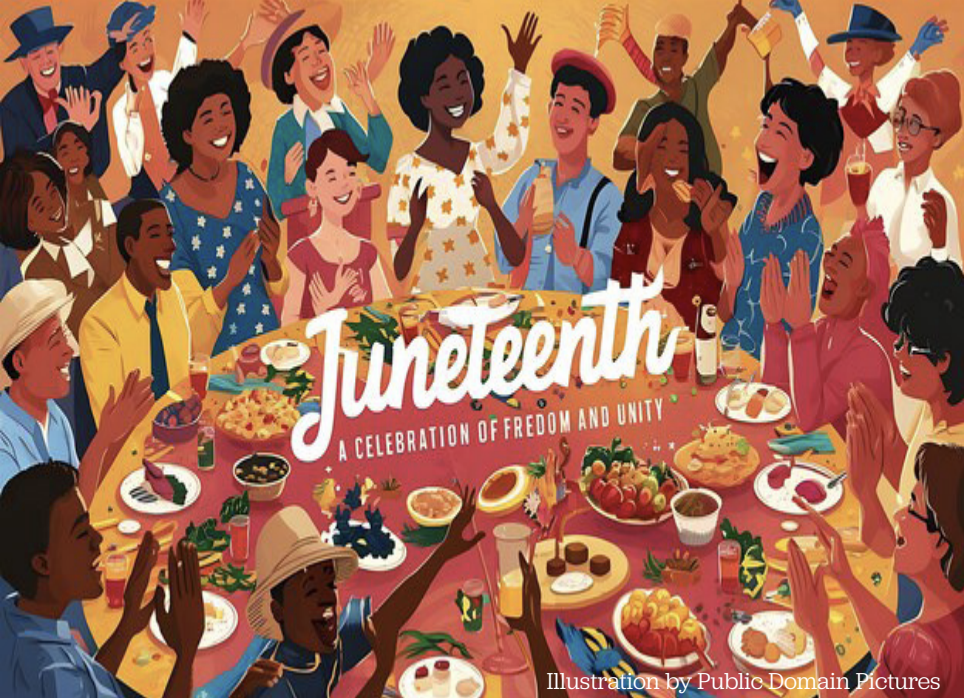
Also known as Emancipation Day and Jubilee Day, Juneteenth events bring communities together through music, dancing, parades, festivals, and family gatherings.
Red foods and drinks such as barbecued meats, cherry cobbler, and red sodas have been vital in Juneteenth celebrations to represent bloodshed and respect ancestral strength and sacrifice.
But it wasn’t always celebrated at CCWF.
“I’ve never seen it promoted in the institution until recently, and I’ve been here since 2016,” said resident M. Njoku.
As far as she knows, Juneteenth has been celebrated in her family for generations.
“Events were held at a park in Sacramento. We played games and sports and they gave you updates about resources in your community concerning African Americans,” she said.
Many of us didn’t have an understanding of Juneteenth or its importance before our incarceration. As each year passes, I notice more and more people who choose to participate in its educational events. Through these events, we’re learning more about the need for civil rights and activism.
Within the past couple of years, CCWF has had success in throwing a gathering together. I’ve seen traditional dancing, heard spoken word poetry, singing, and praising at past events along with Juneteenth colors of red, yellow and green.
A sense of camaraderie and community builds with each Juneteenth celebration. The support and interest from many other cultures have increased, showing us how our cultural background doesn’t divide us; it brings forth unity.
Now, I’m able to share more of what I’ve learned with my grandmother and the rest of my family. Who are you sharing your history with?