Keeping Lunar New Year alive at CCWF

Happy New Year!
Approximately 2 billion people across the globe celebrate the Lunar New Year, principally observed in Vietnam, China, North and South Korea, the Philippines, Singapore, Brunei, Indonesia, and Malaysia.
My father immigrated from Vietnam in the 1970s at the end of the Vietnam War, and he was determined that his children would know the culture, traditions, and customs of his native country.
Growing up in Sacramento, California, I remember how we would celebrate the Vietnamese New Year.
The popping of red firecrackers and the smoke-filled air signaled it was midnight.
My siblings and I stood excitedly waiting for the long line of firecrackers to finish popping, at which point we screamed, “Chúc Mùng Năm Mói, Happy New Year!” This began our New Year’s celebration. At midnight, we hung red firecrackers from the top of the door all the way down, and we lit them in the hopes that the sound would scare away the evil spirits from entering our home.
The Lunar New Year, also called Tết in Vietnamese, happens yearly in late January or early February. Most Southeast Asian cultures celebrate the Lunar New Year, as time is measured by the cycles of the moon. His torically, Tết is celebrated between the autumn rice harvest and the spring rice planting. This celebration shows appreciation for the previous harvest and hopes for future crops.
Days before the New Year, our house was cleaned from top to bottom in preparation for the coming celebration. Preparing the feast was a family affair. We formed assembly lines as we cooked mounds of noodles, rice, egg rolls, vegetables, pork dishes, beef with mouthwatering sauces, bán tét, traditional sticky rice cakes made with mung beans, fatty pork wrapped in banana leaves, sweet bean desserts, sticky rice with sweetened coconut, and fresh fruits with salted chili sauce.
Red envelopes were stuffed with crisp new dollar bills. Our ancestral altar was cleaned off and adorned with fresh fruit. We were never allowed to fight or argue — nothing that could be negative was allowed on this auspicious day, as it would invite bad spirits upon our household for the coming year.
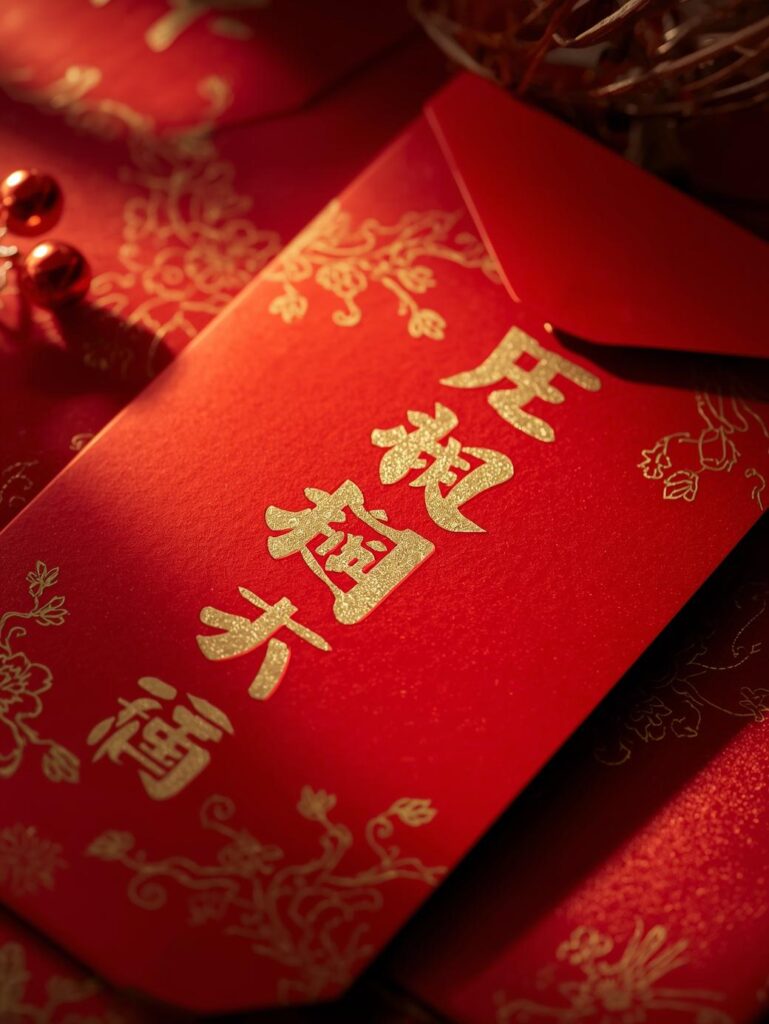
As the day began, my siblings and I lined up from oldest to youngest in front of our parents. In great anticipation of the money we would receive, we stood with our arms folded across our chests, saying: “Chúc Mùng Năm Mói,” meaning “Happy New Year,” as we received red envelopes. The amount inside the envelope ranged from a $1 bill to a $100 bill as a wish for success, longevity, and growth in the new year. It is considered a sign of disrespect to open the envelope in front of the person who gave it to you, so we ran off into our rooms and ripped open the envelopes to see how much money each of us got.
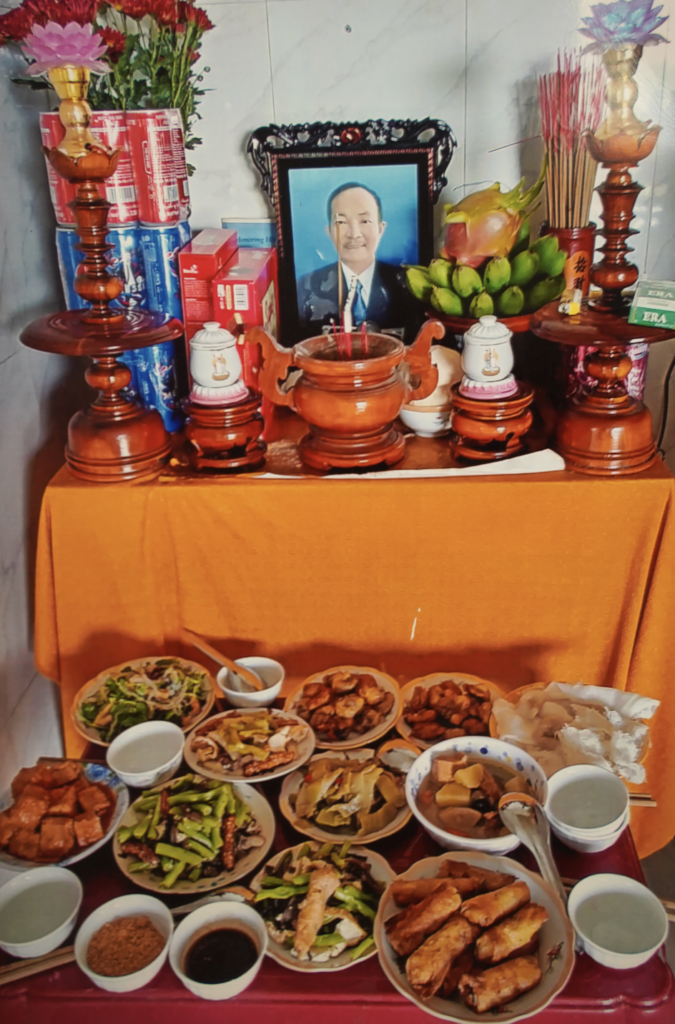
In the morning, we loaded the ancestral altars with the prepared dishes. My father began by lighting incense in order to summon our ancestors home to celebrate the new year with us and bring blessings. Once my father finished his prayer ritual, we all lined up to light our joss incense sticks. Once the joss sticks burned down completely, the feast would begin.
Around noon, our relatives arrived, and the same routine was enacted all over again. The adults sat around huge tables sharing food and alcohol, while we kids played a game with six objects: a crab, a shrimp, a lotus shell, a rooster, a fish, and a Yin Yan symbol, and we would wager with coins as we shook the dice playing the gambling game.
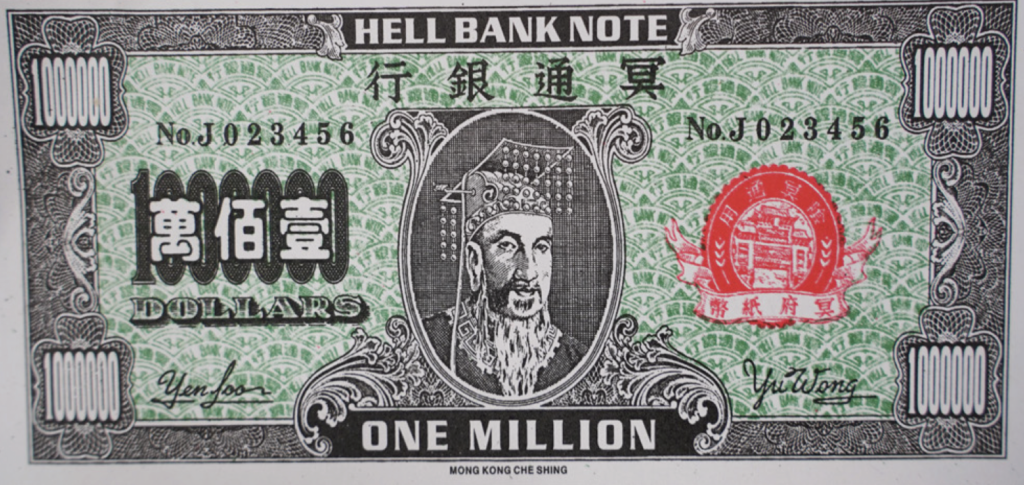
At sunset after the first day of the New Year celebrations, we lit a bonfire in our backyard with paper money and paper items we purchased especially for our ancestors. As their living relations, it was our duty to provide for our ancestors during their afterlife, since they intercede on our behalf in this life.
Here at CCWF, the Asian population is quite small, yet there is commonality in the memories shared and the importance of this holiday among the variety of nationalities.
CCWF resident Jacqueline Ma, born in Korea, shared her childhood memories of the lunar celebration. She recalled visiting family members in her traditional garment called “hanbok,” as well as receiving the red envelopes after bestowing good wishes for the new year.
“I remember feeling so excited counting each envelope,” Ma said. “Eating traditional family dishes and spending time with grandparents, aunts and uncles was amazing.”
Another resident, Mei Li, born in Hong Kong, fondly remembers that the lunar celebration consisted of a great deal of preparation before the event, which lasted for many days afterward. There was often no school for the children and no work for the elders. These traditions are very similar to the celebrations of the Vietnamese and Korean New Year.
“About a month before the Lunar New Year Day, my mother took me to various stores to shop to find the best clothing. It was throwing the ‘old’ away to welcome the new. On the midnight before New Year’s Day, right before 12 o’clock, my mother made me change into new pajamas to go to sleep,” Li said.
Celebrating Tết is very different and difficult to do while being incarcerated. But, nevertheless, I do celebrate.
I stay awake the night before until midnight, reminiscing on the past year and manifesting my hopes and wishes for the coming year. Usually, I fall asleep immediately afterwards because I must work the next day. I always make a sweet dessert; I am partial to pie and share it with my closest friends, who are just like my family.
I do not argue. Instead, I make sure I spend time in quiet reflection on my ancestors and my appreciation for the past year while I ask for their intercession in the coming year.
I boast about the New Year as I walk the yard and extend my greetings to all as I say, “Happy New Year.”