Maintaining ethnicity while incarcerated
Ethnicity is defined as your background, where you come from, your language, your customs, and your belief systems.
Growing up, I spoke predominantly Vietnamese at home. Today, I have conversations on the telephone with family members who no longer speak Vietnamese as fluently as we once did as children.
This is a common occurrence for members of my family at home, as well as for members of other ethnicities here. When a native language is not used as frequently, it becomes lost. Traditions and customs transform and are eventually forgotten when not practiced regularly.
But there are those of us in this melting pot of incarceration who still maintain their ethnicity, despite adapting to prison culture, which is predominantly English-speaking with American traditions and practices.
During my years working in Canteen and processing items to be scanned, my Texan Mexican American boss would be at the computer waiting for the count so he could input it into the system. I so often slipped into Vietnamese while counting that he eventually understood which word correlated to which number.
I don’t always catch myself when I say something in Vietnamese; sometimes, I am not even aware that I do it. But if you live around me or work with me, you will notice it and pick up on what I am saying.
That is how I maintain my ethnicity while incarcerated. I speak my language to my English-speaking peers.
When I call home, I speak Vietnamese to my family. I share Vietnamese food that I cook and teach my friends how to season food with our infamous fish sauce from Southeast Asia. I educate my associates about my traditions and culture.
Members of other ethnicities here at Central California Women’s Facility maintain their ethnicity in similar ways, and we also share similarities in the challenges we face in the ways we attempt to maintain our cultural ways.
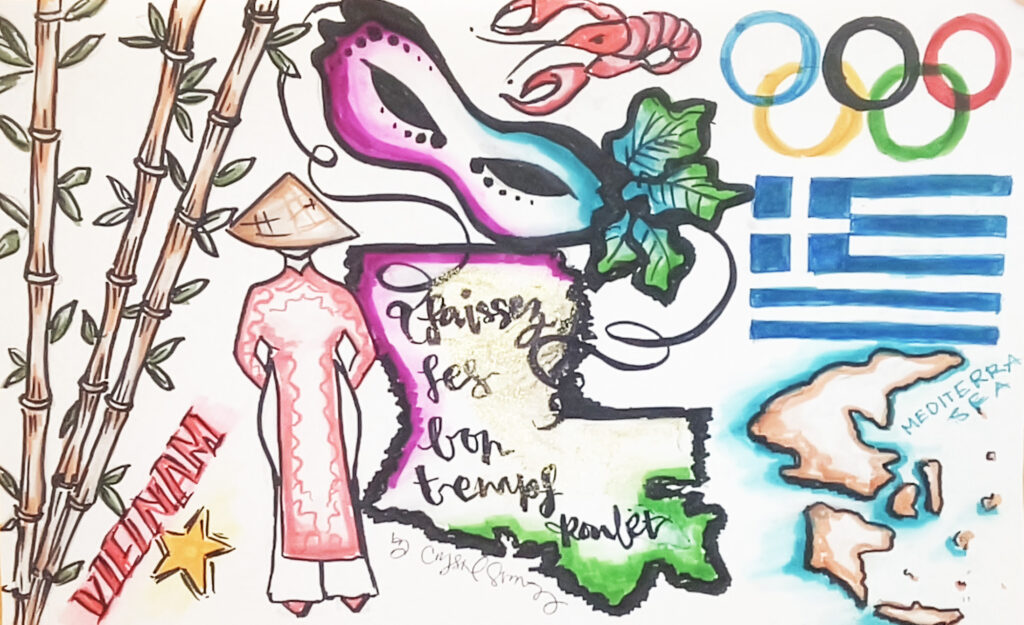
Incarcerated individual Crystal St. Mary identifies her ethnicity as Creole. One of the ways in which she maintains her ethnicity is through sharing aspects of her culture with her peers.
“An important piece of my culture is we do not practice voodoo, contrary to popular belief. And even though our ethnicity is Creole, our race is proudly part of the African migration,” said St. Mary.
When asked what challenges she encounters maintaining her ethnicity while incarcerated, St. Mary reflects, “It gets me down sometimes; the fact that I don’t have anyone who knows and understands my culture. I miss dancing. I feel like I can’t truly be Creole here.”
Incarcerated individual Cynthia Dubose (née Drakopoulous) identifies her ethnicity as Greek. She stays in contact with family members residing in Greece through phone calls and videos.
“I want people to know Easter is our most important holiday. The Olympic Games were started in Olympia, Greece, to honor Zeus, the King of our Gods. The Greeks established democracy, philosophy, and drama originated in Greece,” said Dubose.
Not having others to speak Greek with is causing her to forget her language, and the lack of available ingredients makes it hard to cook authentic Greek meals, she says.
The common thread in all our stories is the risk we face in losing our ethnicity as we continue to be far away from our communities of origin and are forced to assimilate into the culture of prison where the English language is dominant and American traditions are celebrated.