CCWF welcomes Day of Healing
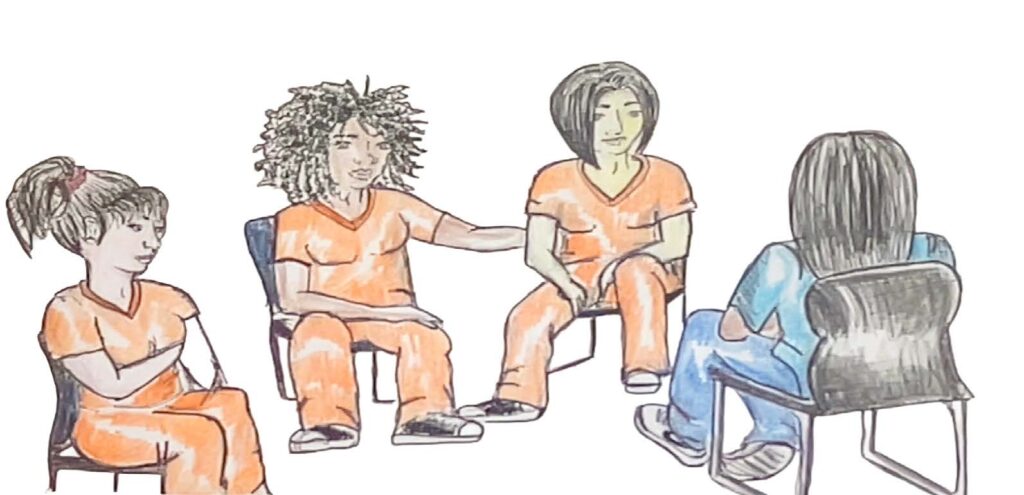
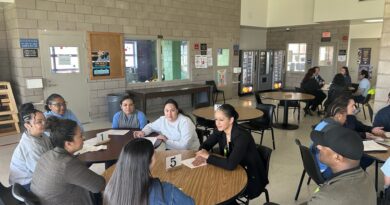
On Jan. 14 and 28, new arrivals to Central California Women’s Facility (CCWF) gathered in the gym for a Healing Trauma course led by resident facilitators. Two separate “Days of Healing” brought over 200 residents from CCWF’s reception center together with seasoned residents in an unprecedented effort to jump-start their rehabilitation and instill hope.
As 9 a.m. neared, eight circles of chairs gradually filled, and the gym buzzed with anticipation and the steady hum of fans. Group facilitators from program provider Velda Dobson-Davis’ team prepared to lead each healing circle through an intensive introduction to trauma and how to address it productively. Research by the Compassion Prison Project shows that prisoners comprise the most highly traumatized population in the world, and that unaddressed trauma is strongly linked to criminal behavior
Developed by Pathways to Kinship, the Healing Trauma curriculum covers discussion of trauma and our responses to it, Adverse Childhood Experiences and their lifelong impact, healthy vs. unhealthy relationship dynamics, and forgiveness as a path to healing.
Pathways to Kinship was founded by Marc Vahanian with the mission, “Empower people to get free, stay free and thrive!” The nonprofit organization offers a range of courses in insight, empathy, victim impact, relationships, financial literacy, preparation for parole board hearings and reentry, as well as outside resources and support.
When asked about his motivation, Vahanian said, “I believe in second chances. …Family, race, neighborhood, economic status – these can be potent negative forces. I was fortunate to get help at every stage. Without the mental health and economic support, I fear I would have succumbed to darker forces. I am grateful to have something of value to offer folks on the path to freedom.”
For the Day of Healing, Vahanian collaborated with Dobson-Davis to educate incoming residents and show them that they’re not alone by offering a healing opportunity earlier, rather than enabling them to potentially continue negative patterns in general population.
“Ms. Dobson-Davis is a force of nature,” said Vahanian. “She is one of the most passionate, hardworking servant leaders I have ever met.”
Dobson-Davis opened the day by asking, “How many of you are moms?” She has worked in the California prison system for 47 years, during which she retired temporarily and then decided to come back. A grandmother of 27, she reminded the mothers of the impact of their children wondering, “Why is my mom in prison? Why did she choose that over me?” This day was an invitation to develop the insight required to disrupt intergenerational trauma.
Participants switched facilitators by topic, experiencing varied instruction styles. For example, one group paused for a 30-second dance break after the discussion became very emotional. Another facilitator refocused her group with short breathing and meditation exercises, while others used intellectual illustration or shared personal experiences.
Dobson-Davis hired two of the facilitators from the former Condemned Row housing when they were reluctant to join general population, thereby catalyzing their healing.
“If it weren’t for her, we wouldn’t have had these opportunities. We had no exposure and no hope. The third day out, she sticks us in the middle of an event and puts us to work,” said facilitator Manling Williams, previously housed on Condemned Row. “Now my motivation is paying it forward…giving (residents) inspiration that they’ll take and learn from.”
A particularly poignant moment occurred in one group when a young woman who now chooses the name Nevaeh shared some of her past abuse and her pain around her children. After her arrest she had immediately felt the impact of her children being without her. She was sharing her own pain for the first time, and was visibly shaking but showing courage. Her new awareness of trauma’s physiological impact showed in her ability to connect her emotional pain to bodily sensations.
“I feel my kids, I feel them here,” she said tearfully, patting her chest. “I need to get back to them.”
Without this preemptive chance to embark on a healing path, residents can feel hopeless and perpetuate criminal patterns inside. When asked what inspired her about the Day of Healing, facilitator Valerie Nessler commented, “Everyone is so open and eager and vulnerable, hearts so genuine…we can instill in them that hope that we never got.”
Participant Jordan Dockery expressed relief in hearing that “it was OK to cry, to open up and share…not hold it in and keep a tough face.” Another new arrival, Gina Bean, summarized her takeaway: “We aren’t defined by our trauma, and we can push forward and change.”