Women and Gangs
What attracts them to gang culture is often specific to women, and so is finding a way out once incarcerated
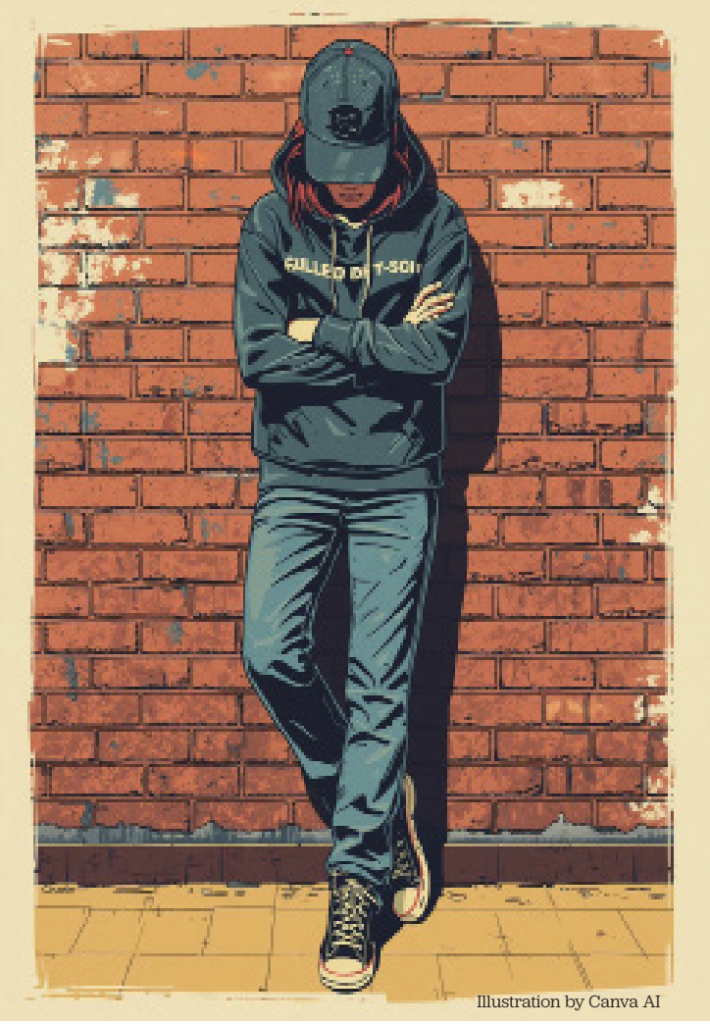
Gang violence is prevalent in neighborhoods, affecting and changing the course of people’s lives in an instant. So, what happens when those members end up in prison? And does it matter if those members are men or women?
The five women profiled in this article — all at one time residents of Central California Women’s Facility (CCWF) — recognized the differences between male and female incarcerated gang members while trying to pursue a better way of life, change their belief systems, and understand their values. These women came from different walks of life, different parts of the state, and, most notably, different or rival gangs — on the streets, that is. And, unlike their male counterparts, women gang members coexist and even have pseudo-families while incarcerated.
Why Women Join
A 2024 study by WestEd Justice & Prevention Research Center (JPRC) found that women join gangs for some of the same reasons as their male counterparts. Gangs can provide a source of income, security, excitement, family, street credibility, or protection from other gangs or neighborhood violence. In other words, gangs can offer a way to survive. Many people come to gangs through family members — they are brought up in it, married into it, or associated with it through their romantic partners. This last pathway is particularly relevant to women.
The JPRC study also states that female gang members experience an excessive amount of victimization early in life. Female gang members often have a history of physical and/or sexual abuse at home by older male figures who are either family members or family friends, and continue to experience abuse by their male counterparts upon entering the gang. According to the study, this form of victimization is rarely experienced by male gang members.
For Shachie Day, being part of a street gang allowed her to feel loved, supported, and escape the verbal abuse she suffered at home. Having older relatives who were gang members somewhat influenced her decision to join. But, ultimately, all she craved was the intimacy of family she felt the gang could provide.
Maria Alaniz, a former CCWF Paper Trail contributing writer, was first exposed to the gangs through her cousin, whom she remembered everyone admiring. But it was her boyfriends who brought her closer to the activities she found attractive.
Lacey Crenshaw was introduced to biker gangs at a young age by her mother. Eventually, her mother left, but the gang mentality still existed.
“I was brought up in poverty, we moved around a lot, it was the culture and the lifestyle,” Crenshaw said.
As an adult, Crenshaw was married to a prison gang shot caller. She thrived from the power, control, and respect her husband had, even though women could not engage in gang activities. She remembers being attracted to the gang lifestyle for as long as she could remember.
Nancy Moreno’s story is similar. Moreno came from a very dysfunctional family where she experienced neglect, abandonment, and rejection. She became romantically involved with a man 11 years her senior who was a part of a cartel.
“When this man came along, he was the first man to show me what I thought was love and belonging in a world of gangs, drugs, and power,” Moreno said.
She immediately viewed him as her new family and had strong loyalties to him. Soon, Moreno started committing heinous crimes with him and his crew without remorse and without thinking of the consequences. For Moreno, the consequences were consecutive sentences of life without parole, life, and 20 years for crimes she committed when she was 18.
The Complications of Gang-Affiliation in Prison
Male gang members often continue their gang activity while they are in prison. And as a result, the 28 Level I-IV men’s facilities are plagued with prison politics and rules, separated by yards, levels, race, geographical location, and gang affiliation. According to the California Department of Corrections and Rehabilitation (CDCR) Department Operations Manual, 52070.26, “gang-affiliated inmates shall be transferred in accordance with the CCR, Title 15, and the DOM on the basis of documented individual behavior and case needs.”
It’s a very different situation for women. When you land in a wom- en’s institution, that’s just it — “you land” — in one of two facilities: CCWF or California Institution for Women (CIW), and you stay there. Prior to 2012, women could also be housed in Valley State Prison for Women (VSPW). CCWF houses every custody level, whereas CIW now houses lower-level offenders and other cases with the warden’s approval. At CCWF, a Level I resident can be housed in the same eight-person cell with a Level IV. When there are issues inside rooms, residents must work through them unless there is a documented incident.
Most of the women interviewed came in with prior knowledge of and experience with the workings of prison, whether it be men’s or women’s prisons. Day, for one, said she was told to “stay strong, stay to yourself, don’t allow anyone to give you anything, and don’t get in anyone’s business.” These words were her saving grace for doing her time.
After being charged at 17 years old, Erica Hitchcock received a life sentence at age 19. A loyal member of her gang, she was schooled about prison; she was told it was just like the streets: “stick to your own homies and you’ll be alright.”
Once she entered prison, Hitch- cock knew she had to acclimate and do it quickly. The life she was used to was no longer. Though she knew people where she was headed, she had to create her own path and start all over. She had made a name for herself in the streets; now she had to do the same in prison.
Hitchcock would soon find out that, unlike the men’s prisons, there was no structure in a women’s prison when it came to the gang lifestyle. No one was politicking. Everyone was intermingling, housed with each other, and it was like “anything goes,” said Hitchcock.
There are no records to indicate the number of incidents that are classified as gang-related at any of the women’s facilities. From word of mouth, residents know that wom- en do get jumped because of their gang involvement in the free world or prison, turning state’s evidence (turning on their gang), or claiming to be from a particular gang when they are not, amongst other reasons.
But, broadly speaking, there is no other option but to coexist in a women’s facility.
It took Alaniz a while to come to this realization, entering prison in 2006 at the age of 19. She had been a resident of all three California women’s institutions at one time or another. Though the three prisons had specific elements to them, CIW gang culture was run by sticking with your county, while VSPW was more integrated both with gangs and race.
“You seen interracial couples, Northerners and Southerners kicking it,” Alaniz recalled. “It was different than what I was brought up to believe it should be.”
Day found a different reality at CCWF.
”CCWF was real gang banging. Although certain individuals were in relationships with rivals, neighborhoods stuck with neighborhoods,” said Day. She admits that when she first arrived, she did not really interact with her rivals. “If they wasn’t on it, I wasn’t either.”
Something can be said about the bonds that are created when women are isolated in a farmland in the middle of nowhere together. They have similar internal and external struggles. They yearn for a visit from their family and children. After spending years behind electrified fences that have no mercy on a person, it is almost imperative to survival that commonalities start to be recognized and, if need be, challenged to achieve common goals.
It is not uncommon for women to seek pseudo-families to fulfill Maslow’s Hierarchy of needs: physiological, safety and security, love and belonging, self-esteem, and self-actualization. In a women’s prison, room dynamics can often mimic those of a family. So even if one is not a gang member, the mentality of the structure can be the same as a gang member’s mentality and belief system. This sense of a familial relationship may also serve to increase loyalty among members and non-members alike.
Programming for Women
It took Alaniz multiple fights and two race riots to realize something in her life had to change. This was her “aha” moment.
That turning point was one of the last race riots she participated in; she found that it was those from different races who “had her back.” From that day forward, she said, “I realized people were just people and I had been operating from an ingrained belief system, not my own.”
She no longer looked at geographic or cultural beliefs when forming friendships. Alaniz started out by participating in Girls Advocating New Greatness (GANG) classes in the housing units. “No one wanted me in their groups because of my past,” said Alaniz, but Live, Learn, and Prosper gave her the opportunity to start a new journey of rehabilitation.
GANG was a program offered at CCWF to help women explore why they joined a gang, as well as avenues to look for a different, more prosocial way to live.
Criminal & Gang Members Anonymous (CGA) is offered in many of the CDCR prisons, including CCWF. CGA is a 12-step recovery program for criminals and gang members. Its philosophy is based on the obsession, compulsion, and progression addiction cycle.
The program’s primary purpose is to develop and practice a better way of living free of destructive addictions and to reach out to help other criminals find a peaceful, productive way of living. Founded in the 1990’s by a man who only goes by the name Richard M., CGA provides its participants with 12 steps to recovery, 12 traditions to safety, 12 promises through recovery, and the CGA prayer.
Another program offered at CCWF is one that was created inside the facility: Gang Insight, Impact, and Prevention (GIIP). GIIP uses a variety of skills to reach everyone in their workshops, from worksheets to person-involved presentations. GIIP is broken into six weeks of workshops specific to gangs, and a participant must complete all six to graduate.
Alaniz paroled in January 2026 with plans to return to CCWF someday as a program provider or guest speaker to talk about her transition from a gang life to a productive member of society. Despite the life sentences each individual received, Hitchcock, Day, Crenshaw, and Moreno are all working toward their release.
“There’s always hope,” Moreno said. “I am far from perfect, but I can take pride in the person I am today. I can help create positive results for others with the mentoring I do.”